The UniversitySection 4
What the Dean Smith Center Actually Runs On
The Dean E.
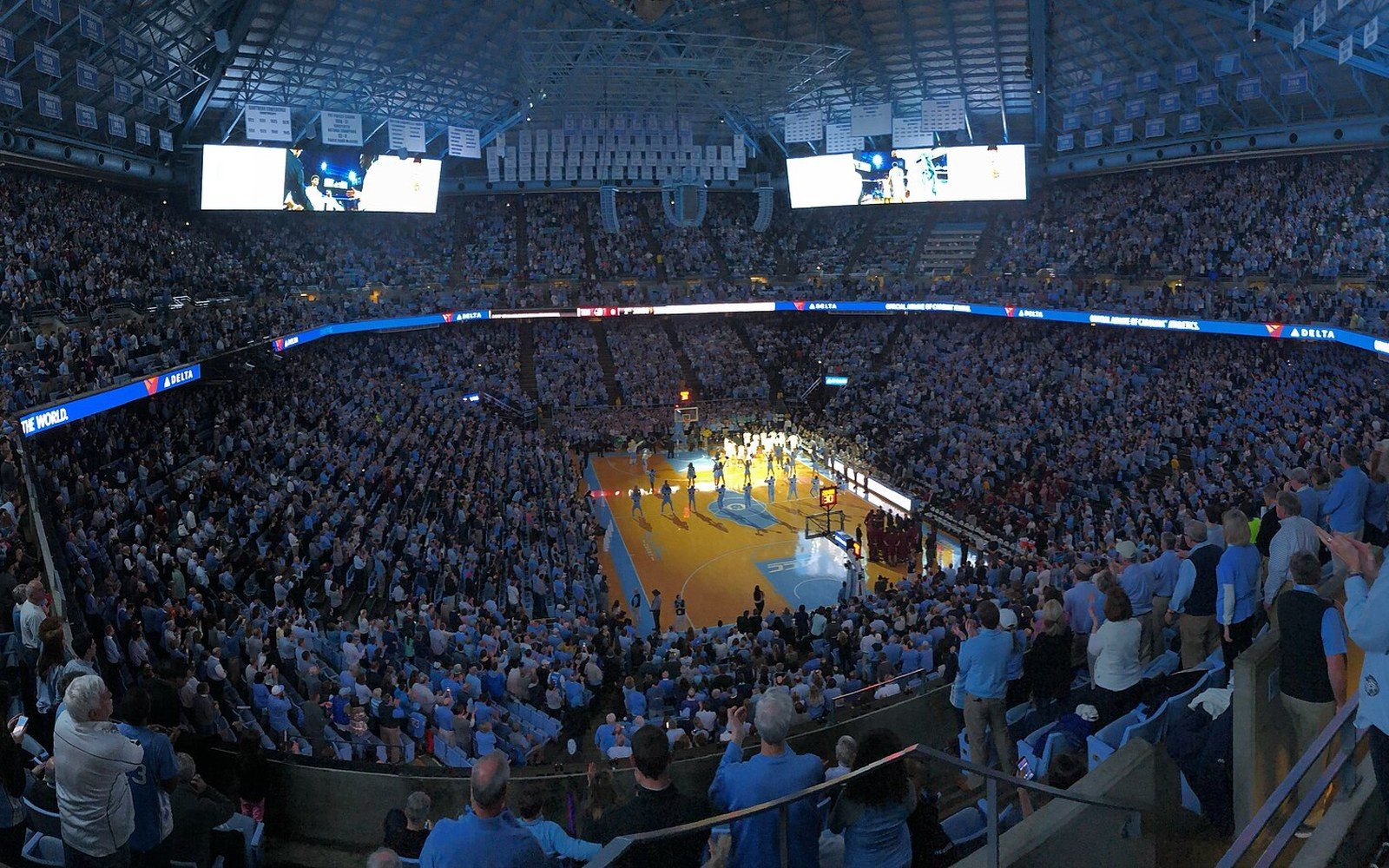
The Building and What It Holds
Smith Center opened in 1986 on the south edge of the University of North Carolina at Chapel Hill campus, named for the coach who would win his second national championship seven years later, in 1993. Its seating capacity sits at approximately 21,750, making it one of the larger arenas in college basketball and the dominant indoor venue between Raleigh and Charlotte. The building is not a supplement to the athletic program. It is the engine.
UNC basketball operates inside one of the most financially productive athletic departments in the country. According to the U.S. Department of Education's Equity in Athletics data for fiscal year 2023, UNC's total athletic revenues exceeded $130 million. Men's basketball is the single largest contributor, generating roughly $40 million in annual revenue from ticket sales, media rights distributions through the Atlantic Coast Conference, licensing, and postseason distributions — figures that shift year to year with tournament runs but consistently place the program among the top tier nationally.
How the Money Moves
The Atlantic Coast Conference distributes television and NCAA Tournament revenue to its member institutions, and UNC's deep postseason history — including the 2009 and 2017 national championships under Roy Williams — has kept those distributions substantial. Each NCAA Tournament win generates additional units of revenue shared across the conference, so a Final Four run produces meaningfully more than a first-round exit. The basketball program does not simply earn; it earns differentially based on performance.
Within UNC Athletics, men's basketball revenue cross-subsidizes sports that do not come close to covering their own costs. The department fields dozens of varsity programs — rowing, field hockey, lacrosse, wrestling — and the overwhelming majority operate at a deficit relative to their direct expenses. Without basketball and football together, the department's financial architecture collapses. Basketball's contribution is not incidental to that structure. It is structural.
What does not flow from athletics to the broader university is as telling as what does. UNC, like most major programs, runs its athletic department as a largely self-contained financial unit. State appropriations to the university do not typically subsidize athletics, and athletic surpluses do not flow freely into academic budgets. The relationship is more complex: the university provides facilities, land, and institutional infrastructure; the athletic department covers its own operating costs and, in strong years, contributes to capital projects and academic funds through donor pipelines that are difficult to fully disentangle. Booster giving to athletics and to the university proper often runs through the same donor relationships, even when the accounts are separate.
The Name and What It Carries
Dean Smith coached at Chapel Hill from 1961 to 1997, compiling 879 wins and two national titles, and the arena's naming in 1986 — while he was still active — was an unusual institutional gesture. The building carries weight that goes beyond capacity figures. It draws recruits, holds memories for alumni donors, and functions as a physical argument for the program's continuity and ambition.
The Dean Smith Center seats more fans than any other basketball arena in North Carolina and most in the ACC. On a sold-out night, with tickets averaging well above face value on the secondary market, the gross revenue from a single home game rivals what many mid-major programs earn across an entire conference schedule. Premium seating — courtside seats, suites, club-level access — has become an increasingly significant share of the revenue mix as broadcast money has grown and donor expectations have shifted toward experience-based giving.


The economics of the Smith Center are, in the end, the economics of the university in miniature: an institution built on prestige, sustained by a combination of earned revenue and cultivated loyalty, and permanently vulnerable to the performance on the floor. The Equity in Athletics data the Department of Education collects and publishes annually makes those numbers available to anyone who wants to look — which is its own kind of accountability, even if the full picture takes some assembling.