The ParkSection 3
Pine Land Between Three Cities, 1959
In 1959, the land between Raleigh, Durham, and Chapel Hill was mostly pine scrub and tobacco field — low-value, lightly populated, and sitting at the geographic center of three universities that, taken separately, were too modest to anchor a competitive knowledge economy.
A Planned Place in an Unplanned Region
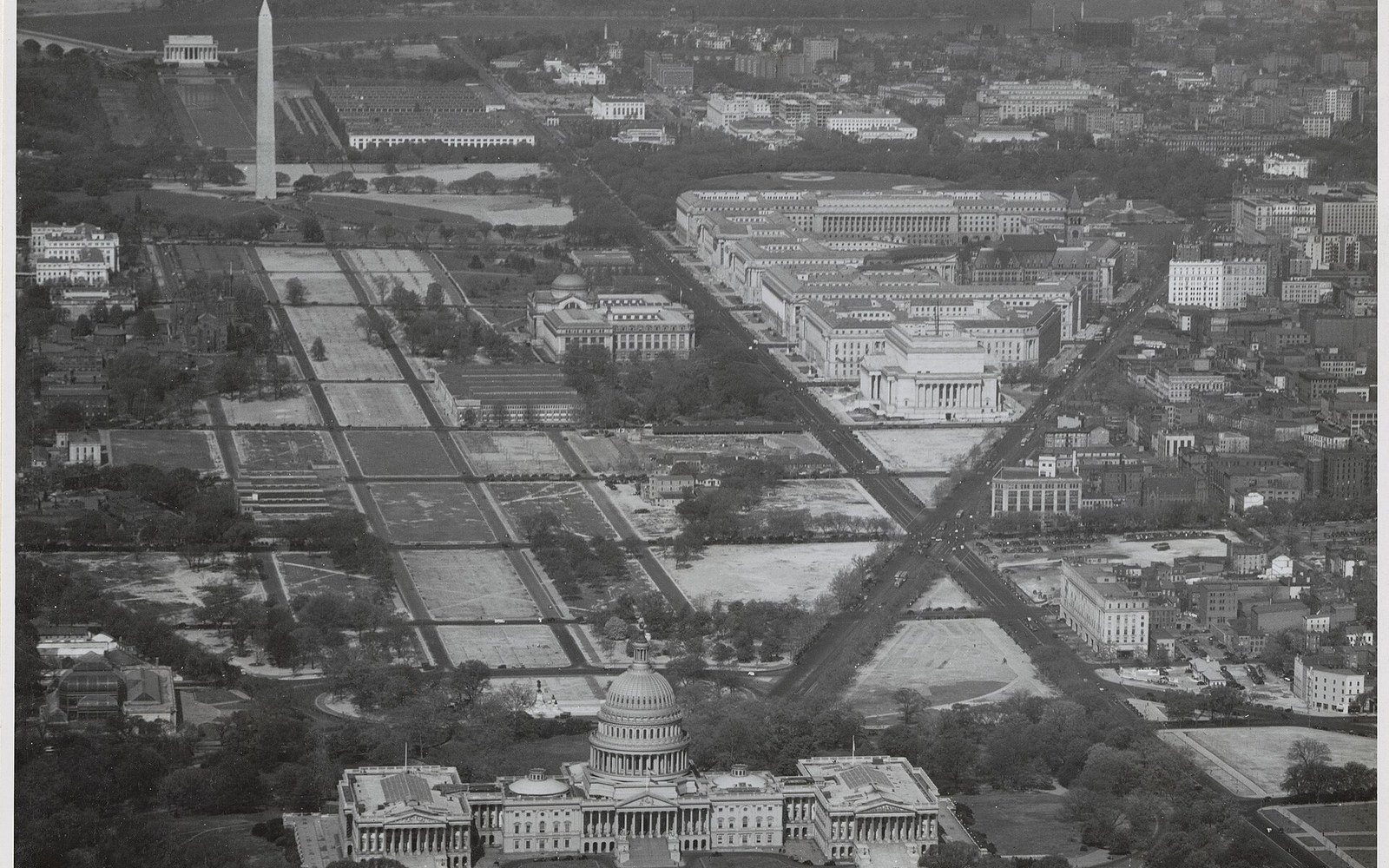
In 1959, the land between Raleigh, Durham, and Chapel Hill was mostly pine, low in value and lightly populated.
Research Triangle Park was incorporated as a nonprofit foundation in 1959, the product of a sustained lobbying effort by state government, business interests, and university leadership to stop North Carolina's educated graduates from leaving for better-paying jobs in the Northeast and Midwest. The state was heavily dependent on tobacco, textiles, and furniture — industries already showing signs of structural decline. What the organizers proposed was a research campus threaded between the University of North Carolina at Chapel Hill, Duke University, and North Carolina State University, close enough to all three to draw on their faculty and graduates without belonging to any one of them.
The land chosen was a triangle of Piedmont pine roughly bounded by the three cities, most of it in Durham County and Wake County with a corridor stretching into Orange County. The Research Triangle Foundation acquired the parcels through the late 1950s, assembling what became a park of more than seven thousand acres — among the largest planned research campuses in the world. The infrastructure was minimal at first: a road network, some drainage, the promise of proximity to three universities and a state government willing to offer favorable conditions to incoming tenants.
The early tenants set the tone. IBM arrived in the mid-1960s. The National Institute of Environmental Health Sciences, a federal agency, established its campus there in the late 1960s. Those two arrivals — one corporate, one governmental — signaled what the park was: not a university, not a factory park, but a deliberately ambiguous research landscape where federal labs, pharmaceutical companies, and technology firms could coexist on the same contiguous campus under a shared civic logic.
What followed was slower than boosters had hoped and faster than critics expected. The pharmaceutical and biotech sector grew substantially through the 1980s and 1990s, with GlaxoSmithKline, Burroughs Wellcome before it, and a cluster of life-sciences firms establishing major operations inside the park's boundaries. The region's population expanded around it — not always tidily. The municipalities of Raleigh, Durham, and Chapel Hill each developed their own commercial and residential tissue, and the park sat between them as a place most people drove through rather than to. There was no there there in the traditional civic sense: no main street, no density, no public transit serving it with any seriousness.
The 2021 announcement that Apple would build a campus in the Research Triangle accelerated a conversation already underway about the park's next form. Apple initially described a facility that would bring thousands of jobs to the region, concentrated in the Raleigh-Durham area. The timeline, predictably, shifted. Apple's expansion plans faced the same headwinds that slowed major corporate campus construction nationwide — supply chain disruption, pandemic-era uncertainty, and a rethinking of how much dedicated real estate tech firms actually needed for a hybrid workforce. By the mid-2020s the original schedule had been revised without a firm completion date replacing it.

What the announcement did, regardless of timeline, was sharpen the region's self-description. The Triangle had long positioned itself as an affordable alternative to the coastal tech corridors — a place with university infrastructure, a comparatively lower cost of living, and enough cultural density in its cities to retain talent. Apple's interest confirmed that pitch's external legibility even as the park itself remained physically thin: a campus of research buildings and parking structures connected by highway rather than sidewalk, still more legible on a map than on foot.
The pine is largely gone now. The land remains planned, the distances between the three cities unchanged, and the original wager — that shared proximity to three universities could substitute for the organic advantages of an established metropolis — has been neither fully won nor fully lost. It is still being run.