Out of TownSection 5
The River That Supplied Durham's Mills
The Eno River runs roughly west to east across Orange and Durham counties, dropping through the Piedmont piedmont as it goes, before joining the Flat River near Hillsborough Road and eventually reaching Falls Lake.
The Eno at Few's Ford
It is not a large river by any measure — shallow in summer, moody after rain — but it powered an economy for two centuries before anyone thought to protect it.
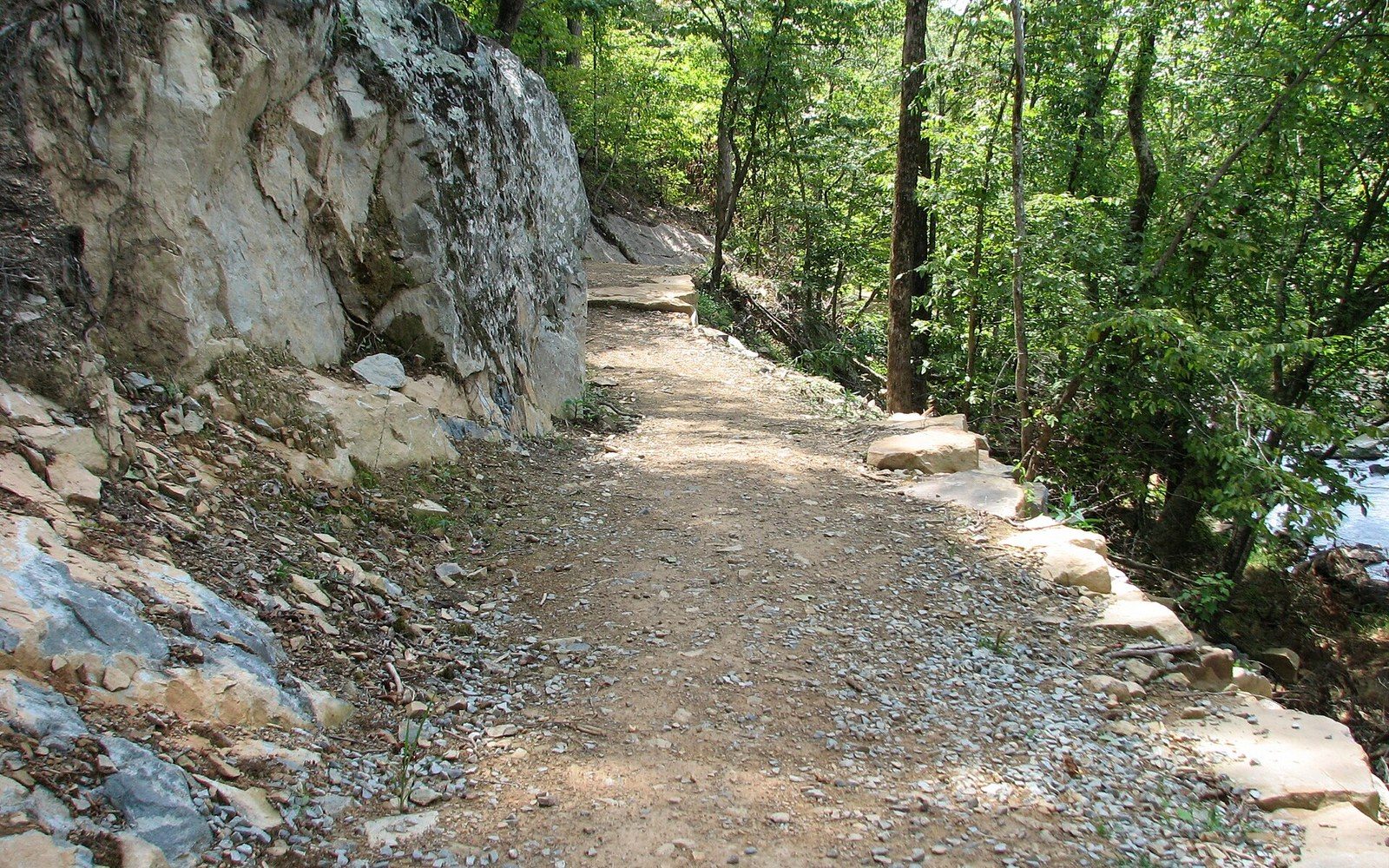
Few's Ford, in what is now Eno River State Park, sits in Durham County on Cole Mill Road, west of the city. The name comes from the Few family, who operated a mill and ford crossing here in the eighteenth and early nineteenth centuries. Stand at the bank on a dry October morning and the river runs clear over flat shelves of stone, knee-deep at most, the kind of crossing a horse could manage without drama. The surrounding ridges are dense with tulip poplar and river birch. The interstate exists a few miles east; nothing here announces it.
The mills are why the river matters historically. Along its roughly thirty-three-mile course through Orange and Durham counties, the Eno supported grist mills, saw mills, and textile operations from the mid-1700s onward. Durham's early industrial identity — predating tobacco's dominance — was partly built on this water. Millponds backed up behind low dams, and millers ground corn and wheat for communities that had no other option. The physical evidence is still readable at Few's Ford: a millrace depression runs near the trail, and the Piper-Cox House, a nineteenth-century structure within the park, stands as a remnant of the agricultural world that the river sustained.
What saved the Eno from a different fate was a citizen campaign that now reads, in retrospect, as an early model of urban-adjacent conservation. In 1966, Durham's water department proposed a reservoir on the river. A local group formed in opposition, which became the Eno River Association, and spent the following years pressing the state to acquire land along the corridor. The association succeeded. Eno River State Park was established in 1973, the same year the association incorporated, and land acquisition continued for years afterward. The park now covers more than four thousand acres across multiple access areas — Few's Ford, Cole Mill, Pump Station, Pleasant Green — each one a named entry point into a continuous riparian system.
The Few's Ford access area is the largest and most-used. Its trail network crosses the river at the historic ford site, loops through bottomland hardwood, and climbs to drier ridges above the floodplain. A walker with moderate fitness can cover six or eight miles without retracing a step, moving between canopy types as the terrain shifts. The park has no admission charge and no lodge, which keeps the visitor profile fairly serious — people who came specifically for this, not people who wandered in.
The Eno River Association remains active, distinct from the state park and still acquiring easements and advocating for water quality in the watershed. The river faces ongoing pressure from upstream development in Hillsborough and Orange County — stormwater runoff, sedimentation, the slow consequences of impervious surface spreading across the watershed. The association's annual Festival for the Eno, held each Fourth of July weekend in Durham, raises operating funds and has done so for decades. It is one of the longer-running outdoor music and crafts events in the region.

What the Eno offers now is a readable landscape: the mill depressions, the stone ford, the flood-scoured banks, the second-growth forest filling in over land that was cleared and farmed and then released. Durham's tobacco warehouses and textile past get more attention, and rightly so — they are still standing, mostly repurposed. But the industrial logic that preceded them ran on water, and the water is still there, moving east through Durham County at its own pace, indifferent to the century.