Franklin StreetSection 1
The Fastest Turnover in Orange County
Franklin Street has always changed. What's different now is the pace.
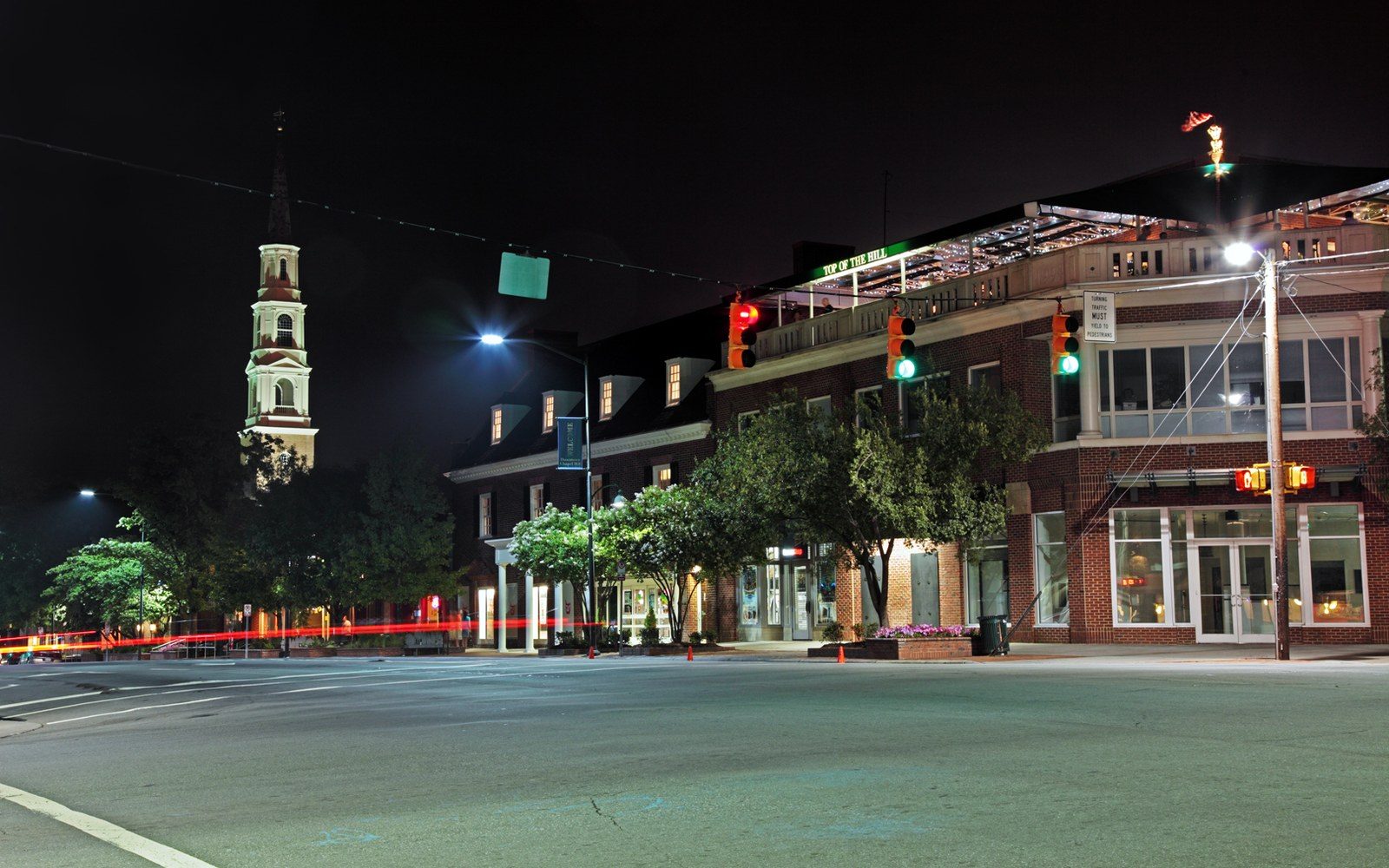
The Blocks That Keep Cycling
The stretch of Franklin Street running west from the corner of Columbia through the blocks approaching Henderson Street has seen more commercial turnover in the past decade than in the two preceding ones combined. The causes are not mysterious: commercial rents in Chapel Hill's downtown core have risen sharply alongside the university's enrollment growth and the broader Research Triangle housing boom, while the foot traffic that once made a small independent restaurant or record shop viable has migrated—to ordering apps, to Carrboro, to Durham. The result is a street that reads, on any given Tuesday, as part occupied, part transitional, and part actively grieving its own recent past.
The pattern has a rhythm. A long-tenanted independent closes. A national or regional chain moves in, lasts two or three years, then also closes when the economics don't hold. The space sits dark for a lease cycle. A new independent, usually food or drink, takes a chance. Chapel Hill's town-and-gown tension makes this harder: the municipality has limited tools to cap commercial rents, and the university's expanding footprint shapes demand without absorbing the cost of what that demand displaces.
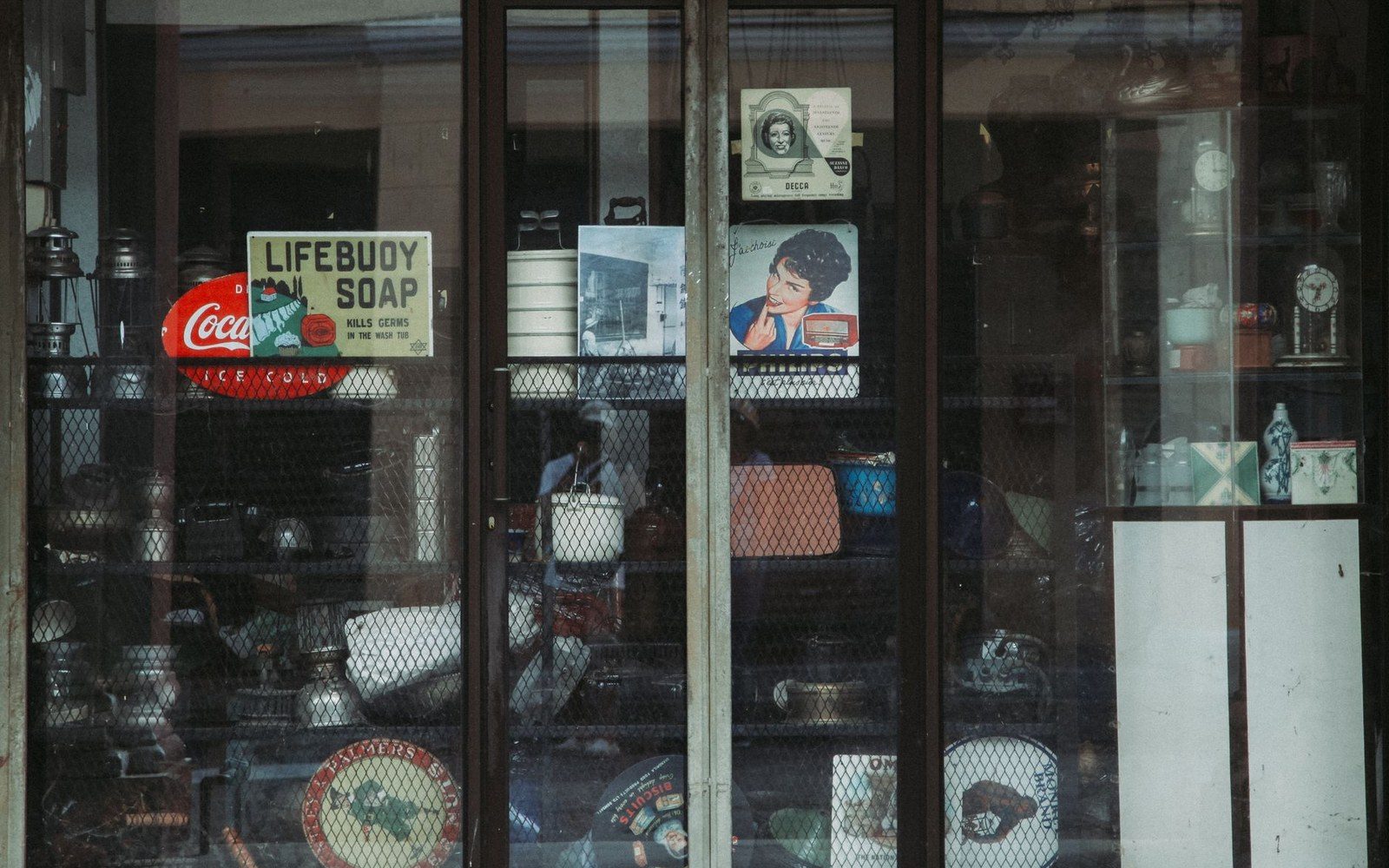
Walk the block between Columbia and Henderson on a weekday afternoon and count the turnover markers: the painted-over lettering on a transom, the paper covering a window, the fresh build-out smell leaking from a unit not yet open. These are the residue of closures that happened fast and departures that were, in most cases, involuntary.
Named Departures
Schoolkids Records closed its Chapel Hill location in 2012 after more than thirty years on Franklin Street, a casualty of the streaming collapse arriving on top of rising rent. It was one of the anchors around which the street's music identity had organized itself, and its absence restructured what the block around it felt like. Across nearly a decade following, the space it had occupied cycled through two additional tenants before stabilizing.
Sutton's Drug Store, which had operated as a lunch counter and soda fountain at 159 East Franklin since 1923, closed in 2017. Nearly a century of continuous operation, then a lease dispute and the building sold. The closure drew significant local attention because Sutton's had functioned as one of the few remaining pieces of mid-century commercial fabric on the street—a place where UNC students, long-term residents, and university faculty had occupied the same stools without the transaction being mediated by a brand identity. UNC Chapel Hill's own historical documentation holds records of the lunch counter's role in the 1960 sit-in movement; the building's commercial history was thus not merely sentimental but archival. Its replacement has cycled through multiple uses since.
The University Mall, a shopping center on the east end of Franklin at Estes Drive, underwent a long distress period beginning around 2016 when anchor tenants including Belk departed, leaving the interior partially vacant for several years. The mall had served as Chapel Hill's primary enclosed retail space since 1973; its hollowing-out mirrored national patterns of mall decline documented by the U.S. Bureau of Labor Statistics' retail employment data, but the local effect was particular: it pulled commercial energy off the eastern approach to Franklin, concentrating foot traffic further west.

Among restaurants, the losses accumulated in a cluster around 2019 and again in 2021. Elaine's on Franklin, a long-running fine dining room, had already closed in 2016. The pandemic years accelerated departures that in some cases were already structurally inevitable—operators who had been managing thin margins absorbed the shock of enforced closure and did not reopen. By the time outdoor dining restrictions lifted in 2021, the list of restaurant spaces sitting vacant or newly retenanted on Franklin had grown long enough that the street's food identity—which had for decades centered on independent operators—shifted perceptibly toward bars, chain fast-casual concepts, and university-adjacent food formats.
What Stayed and What That Means
The persistence of certain institutions matters precisely because of what surrounds them. Top of the Hill, which has occupied the corner of Franklin and Columbia since 1996, functions as a kind of fixed point against which the churn around it becomes legible—a reference institution whose continuous operation throws the discontinuity of neighboring blocks into relief. The Carolina Inn, at the western edge of the core commercial strip, similarly holds: a building that has been there since 1924, owned by the university, insulated from the commercial lease dynamics that govern the rest of the street.
The Ackland Art Museum, the North Carolina Botanical Garden, and the Morehead Planetarium are not commercial tenants and thus operate outside the churn—but their presence shapes the street's remaining institutional gravity. Visitors to the Ackland walk Franklin. Attendees of events at the Planetarium turn up on the block. These anchor effects are real but insufficient to fill a hundred-foot storefront with a sustainable operator.
What stayed on Franklin, looked at honestly, is a mix of the institutionally protected and the individually stubborn. A few independent restaurants have held for fifteen or more years; they tend to be owned outright or on favorable legacy lease terms, and their operators describe managing costs with an intensity that was not necessary in earlier decades. The rest of the street's continuity is largely illusory: the same categories (pizza, tacos, coffee, bars) recurring in different incarnations, each believing it has solved what the previous tenant could not.
The Argument That Accumulates
Franklin Street's identity has never been static. The blocks that now feel transitional were, in the 1970s and 1980s, also cycling—different businesses, different pressures, but cycling. What has changed is the rate, the directionality of what replaces what, and the growing gap between what the street's public role demands of it and what its lease structure can sustain.
A college town main street is supposed to do several things simultaneously: serve residents who are not students, absorb the social life of an enrollment that UNC's own institutional data puts at more than thirty thousand, maintain enough commercial variety to feel like a real place rather than a theme park, and generate the rent that building owners require. On Franklin Street in 2024, those demands are increasingly in conflict. The street is not dying—but what it is becoming is defined as much by accumulation of loss as by any coherent vision of what should be there. That is the honest record of the past decade, and it is legible to anyone who walked the blocks in 2014 and walks them now.