Franklin StreetSection 1
The Corner Above Columbia Street
A brewpub that opened in 1996 has outlasted nearly everything else on the block
The Room That Stayed
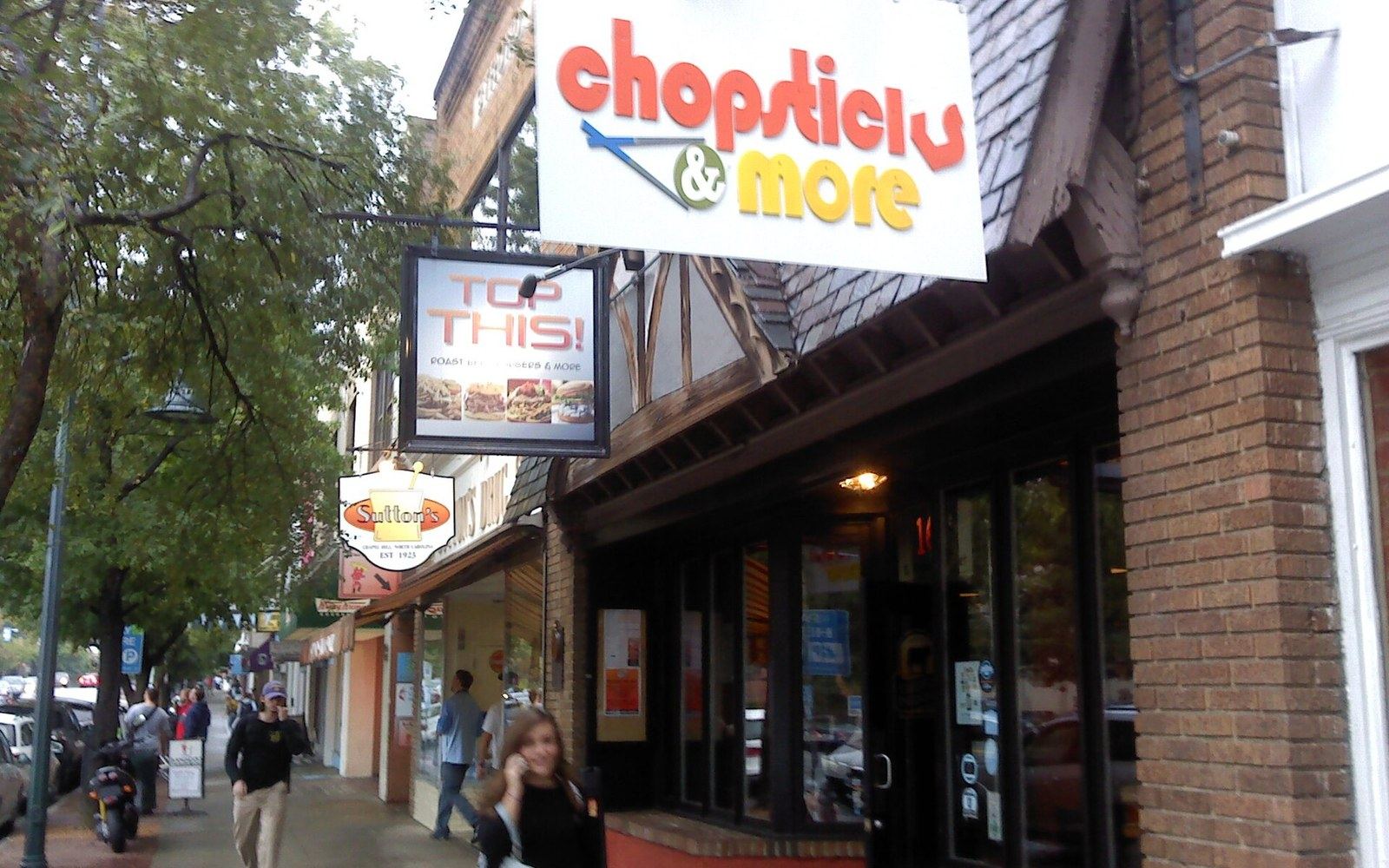
Franklin Street turns over faster than almost any retail corridor in the Triangle. Storefronts that anchor a block in one decade are often gutted shells by the next, their signage pulled and their leases reassigned to something newer, cheaper, or simply different. Against that churn, the building at the corner of Franklin and Columbia Streets has kept the same tenant since 1996 — an unusual fact on a street where the vacancy and replacement cycle runs almost as a constant.
Top of the Hill opened as a brewpub in 1996, occupying the upper floors of the corner building where the two streets meet above the heart of downtown Chapel Hill. The format — beer brewed on the premises, served in the same building — was not novel even then, but the location gave it structural advantages that most Franklin Street tenants never had: a large footprint, a rooftop terrace facing west, and a corner position that meant two walls of windows and visibility from two directions. The Dean Dome and the Carolina Inn were already there; UNC's campus was already a reliable engine of foot traffic that neither a recession nor a slow semester could fully switch off.
What the location could not guarantee was longevity. That came from something else.
The Distillery Upstairs
In 2012, Top of the Hill added a distillery to its operation, becoming TOPO Distillery — one of the first craft spirits producers in North Carolina after the state revised its distillery licensing laws. The equipment sits above the brewery floor: copper pot stills, each one a sealed batch vessel in which a single run of fermented wash is heated and its vapour drawn off through a curved swan neck into a condenser, where it cools back into liquid. Nothing about pot distillation is continuous; each run is discrete, and each batch carries the character of that particular charge. Using grain sourced within the state, the distillery produced a range of whiskeys, gins, and vodkas sold under the TOPO label.
The addition mattered structurally for the business in a way that went beyond product line. A brewpub is licensed and built around a single production process and a single category of beverage. A combined brewery and distillery, operating under the same roof with shared grain sourcing and separate production lines, diversified the building's economic function without requiring a second location. The same corner served two purposes, and the distillery drew a distinct audience — spirits customers who might not have come for a pint.
North Carolina's craft beverage licensing laws continued to shift through the 2010s, and TOPO's early positioning gave it a foothold in a market that was, at the time, genuinely open. By the time larger national distilleries and other Triangle producers entered the conversation, TOPO had years of production and local grain relationships behind it.
What Holding a Corner Means
The specific intersection matters. Columbia Street runs south from Franklin toward the middle of the UNC campus; the block directly below the building anchors the densest stretch of pedestrian traffic in Chapel Hill. Restaurants, bars, and retail operations that open nearby inherit that traffic but also compete within a few hundred feet of each other for the same pool of customers. Turnover is not accidental — it is the outcome of high rents, thin margins, and an audience whose composition changes every four years as one student cohort graduates and another arrives.
Top of the Hill survived those cycles not by repositioning itself with each new generation of students but by becoming, over time, a fixed point in the geography — a place so established that its presence reads as part of the built environment rather than an occupant of it. The rooftop terrace became a graduation-day fixture; the brewery became a named institution rather than a category. Neither happened quickly.
By the time TOPO Distillery's copper equipment was installed and the first runs were cooling in the condenser upstairs, the building had already held its corner for sixteen years. The distillery was an addition to something that had already lasted. That sequence — durability first, expansion second — is not the usual order on Franklin Street.