The TableSection 2
Whole Hog to the East, Shoulder to the West
North Carolina barbecue is the kind of subject that generates more heat than most of its pits.
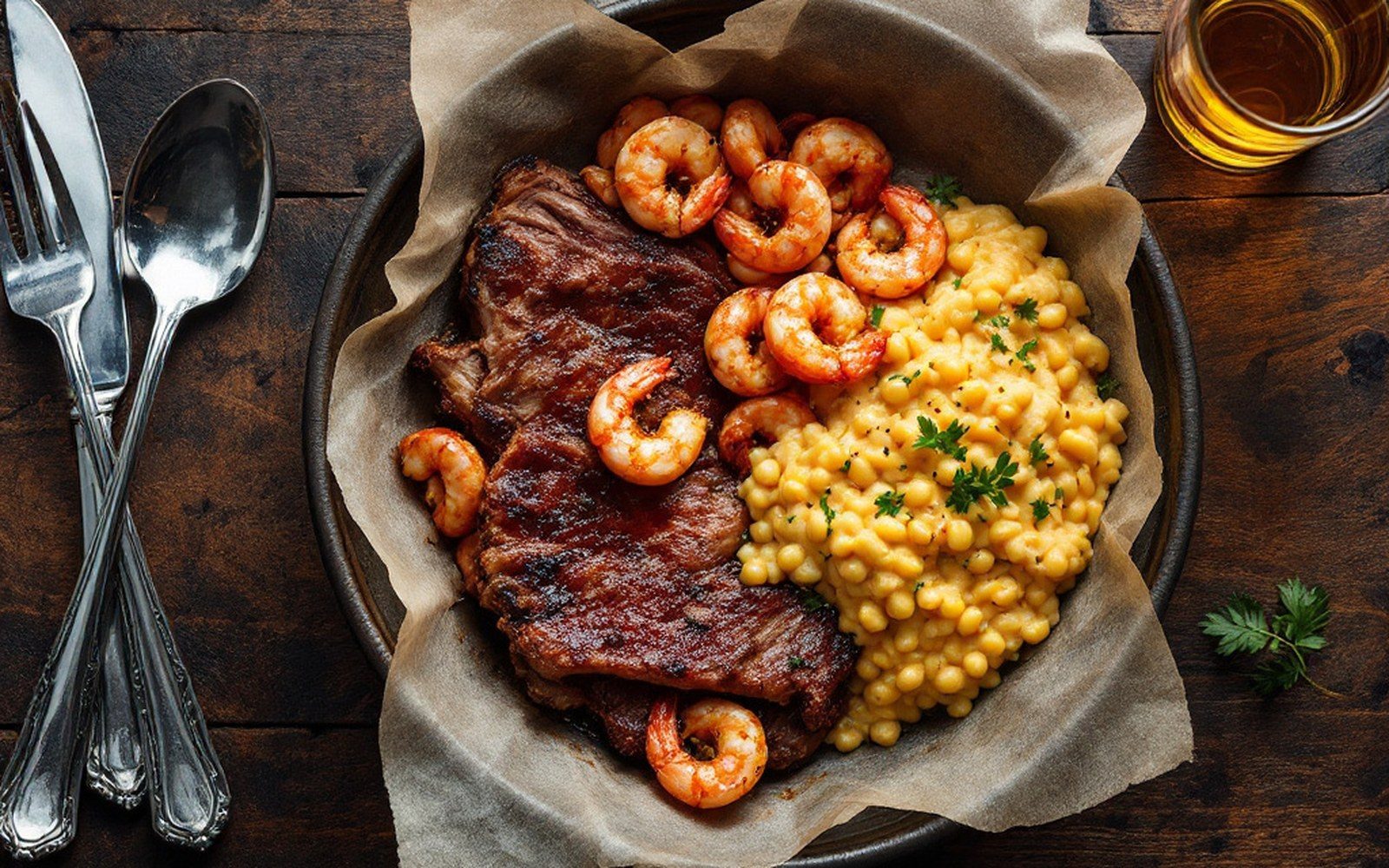
The state has one barbecue tradition. It just can't agree on what that tradition is.
Ask a native which style is correct, and you will likely learn something about where they grew up before you learn anything about pork. The state has been cooking whole hogs over wood coals since before it was a state — the tradition runs back through colonial-era accounts of open-pit cooking across the coastal plain — but somewhere west of Raleigh, a divergence hardened into doctrine. Today two distinct schools face each other across a geographic boundary that no legislature ever drew.
The Eastern style, which claims temporal priority and never lets you forget it, begins with the whole animal. A full pig — typically between 150 and 200 pounds live weight — is split and laid open over a bed of hardwood coals, often oak or hickory, cooked low and slow for anywhere from twelve to twenty-four hours depending on size and pit tradition. Whole hog cooking of this kind requires a pitmaster's attention through the night: coals must be managed, hot spots addressed, the skin crisped and the meat kept from drying. When the pig is done, every part of it — shoulder, loin, ham, belly — is pulled and chopped together. The sauce that goes on it is almost aggressively simple: vinegar, red pepper flakes, sometimes a little salt and sugar. Nothing else. The philosophy behind the formula is that the pork is the subject and the sauce is the accent, and anything richer would obscure what the fire and the hog spent all night producing.

The slaw that accompanies Eastern barbecue follows the same logic. It is white, dressed with a thinned vinegar-based mayonnaise or sometimes straight vinegar, mild and cool against the heat of the meat. It goes on the sandwich. This is not a suggestion; it is structural.
The Lexington departure, and what it produced
Travel west from Raleigh toward the Uwharrie foothills and the Yadkin Valley, and at some point — historians argue over exactly where and when — the practice changed. Pitmasters in the Lexington, North Carolina area, which sits in Davidson County roughly between Charlotte and Winston-Salem, much closer to Winston-Salem, began cooking only the pork shoulder rather than the whole animal. The shoulder, which comprises the Boston butt and the picnic, is a harder-worked muscle with more connective tissue and intermuscular fat. It holds moisture differently than the loin, takes longer to reach the collagen-melting temperatures that produce the pull cooks are looking for, and yields a product that is fattier and more unctuous when it comes off the pit correctly.
The sauce that emerged in the Piedmont tradition is called dip — a term that functions as a proper noun in Lexington — and it is categorically different from its Eastern counterpart. Tomato enters the formula, typically as ketchup, which gives the sauce a faint sweetness and a reddish-orange color. Vinegar remains a component, and the balance of acid, sweetness, and pepper varies by cook, but the tomato makes it incompatible with purist Eastern doctrine, which regards any tomato in the sauce as a capitulation to the barbecue of states that don't know better.
The slaw changes too. Lexington-style slaw is red, dressed with a version of the dip itself. It is tangier and slightly sweet, and it is served on the sandwich as well as on the side, which is itself an operational fact that carries cultural weight. The Lexington Barbecue Festival, held each October in Davidson County, is one of the largest single-day food festivals in the United States and draws crowds that place it well above the scale of most county fairs. Lexington has somewhere between twelve and twenty barbecue restaurants for a town of around twenty thousand people, a density that requires no further argument about local seriousness.
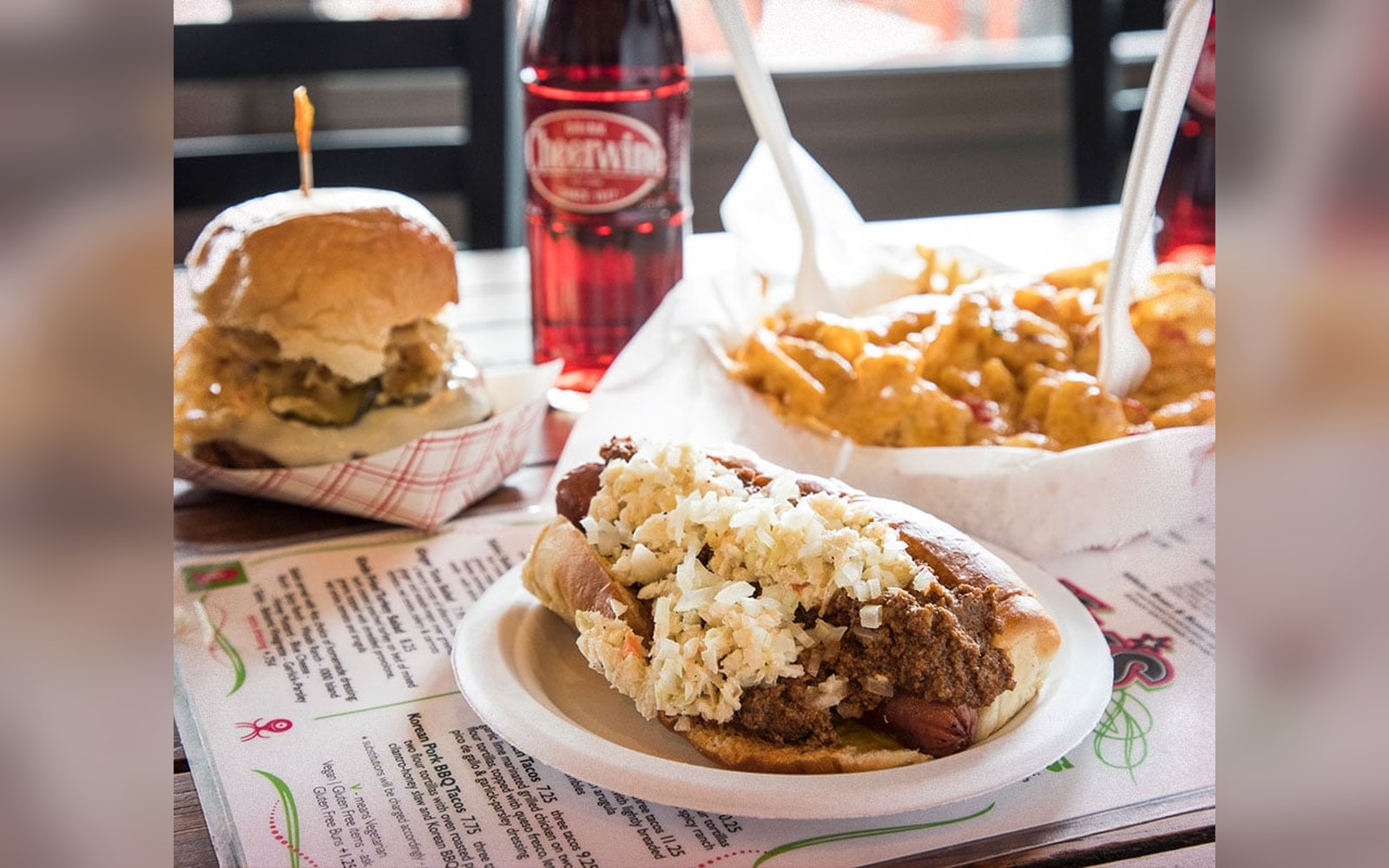
The Triangle sits on the fault line
Research Triangle Park, founded in 1959 on the Piedmont land between Raleigh, Durham, and Chapel Hill, is geographically closer to the Eastern tradition's home territory than to Lexington's. Raleigh sits at roughly the eastern edge of where the Piedmont begins, and the coastal plain — the traditional whole-hog country — starts within an hour's drive east along US 70 or US 264. Goldsboro, Wilson, and Ayden are the canonical Eastern pilgrimage destinations; Parker's in Wilson and the Skylight Inn in Ayden each operate from brick pits and wood coals with a directness that treats modernization as a form of dishonesty.
But the Triangle is also a zone of accumulation — people arrive from everywhere, tastes are plural, and the institutional food culture of Chapel Hill, Durham, and Raleigh reflects a more self-conscious engagement with tradition than you find at a roadside pit that has been there since 1946. Bill Neal's work at Crook's Corner on Franklin Street in the early 1980s brought a scholar's attention to North Carolina's food traditions; his thinking about shrimp and grits was part of a broader argument that the state's vernacular cooking deserved the same seriousness that French technique received. Andrea Reusing at Lantern in Chapel Hill, and Ashley Christensen across her Raleigh restaurants, have each engaged with the state's agricultural sourcing in ways that place the Triangle at the center of a conversation about what Carolina food actually is.
That conversation includes barbecue but rarely settles it. Several Durham and Chapel Hill restaurants serve pulled pork that acknowledges both traditions — a shoulder smoked with care, sauced with something that nods toward Eastern vinegar but doesn't commit fully — which is either an honest pluralism or a failure of nerve depending on who you ask. The wood-fired rigor of the old pits, Eastern or Piedmont, is harder to replicate in an urban restaurant kitchen governed by fire codes and labor costs, and the Triangle's best barbecue frequently arrives from county-edge joints rather than downtown dining rooms.
The line nobody drew
The demarcation between Eastern and Lexington styles is sometimes described as roughly following US Highway 1, which runs through Sanford and Raleigh before heading northeast, but this is a convenience more than a cartographic fact. Food geographers and culinary historians have traced the Lexington influence into places that would seem to belong to Eastern territory by mileage, and Eastern-style joints exist well into the Piedmont. The boundary is a gradient, a zone of overlap, not a line on a survey.
What is not contested is that North Carolina takes the disagreement seriously enough to have organized a significant portion of its civic identity around it. The state has the pits, the families, the festivals, and the arguments to sustain two traditions simultaneously, and the Triangle — caught between them, populated by people who came from one or neither — functions as a kind of pressure-testing ground where both styles must make their case to an audience not predisposed to accept either on inherited grounds alone. That is an unusual condition for a barbecue tradition to face, and it may be why the question of which style is correct tends to get more interesting, rather than less, the closer you get to Raleigh.