The TableSection 2
Bill Neal Put Shrimp and Grits on the Menu in 1982
A single dish at a single counter on West Franklin Street remade what Southern cooking looked like to the rest of the country.

The Dish and Where It Came From
Shrimp and grits — stone-ground cornmeal cooked until it loosens into a soft porridge, topped with shrimp and, in Neal's version, bacon, mushrooms, and a sharp reduction of lemon and Tabasco — was not a restaurant dish before Bill Neal made it one. It existed as a coastal breakfast staple in the Carolina Lowcountry and the South Carolina sea islands, the kind of thing shrimpers ate before heading out, prepared at home with whatever was at hand and never written down in a form meant for public consumption. Neal looked at that tradition and understood it as something a restaurant kitchen could transform without betraying.
Neal had trained himself seriously in French technique — he opened La Résidence on West Franklin Street in 1976, one of the first restaurants in the region to treat food as a subject worth arguing about — but by the early 1980s he had become more interested in the raw material underneath the technique. He was a North Carolinian who had read his way through French culinary tradition and arrived back home. When he opened Crook's Corner on West Franklin Street in 1982, the move was deliberate: a small, unpretentious building with a pig sculpture on the roof, a menu that leaned hard into what the South actually grew and caught and cured.

The shrimp and grits was on that first menu. Neal sourced stone-ground grits from a water-powered mill — the kind of operation that had been disappearing for decades as industrial roller-milling took over grocery shelves — and cooked them slowly, with enough butter and salt to make the corn taste like itself. The shrimp came from the Carolina coast. The dish cost almost nothing to produce in conceptual terms: it was an assembly of honest regional ingredients treated with care and given a name. That last part mattered. Giving it a name on a printed menu, pricing it as a dinner dish rather than a morning staple, presenting it in a room where people sat down and paid attention — that series of decisions was the cultural act.
What Happened After
The food press arrived. Craig Claiborne wrote about Neal in the New York Times. The dish traveled in the way that restaurant dishes travel: through reviews, through the people who ate it and went home and tried to make it, and eventually through the chefs who came through the region and absorbed it as part of what contemporary Southern cooking could be. By the 1990s, shrimp and grits had become the shorthand dish for a revived Southern restaurant tradition — the thing a restaurant put on its menu to signal that it had read the right books and thought seriously about the right questions. It appeared in dining rooms from Atlanta to New York to San Francisco, mutating as it went, accumulating cheese, andouille, cream sauces, and reductions that had nothing to do with the Carolina coast. That proliferation was a sign of the original's influence, not a corruption of it.
Neal himself published the recipe and a broader account of Southern cooking in Bill Neal's Southern Cooking, released by UNC Press in 1985. The book codified what he was doing at Crook's Corner and placed it in historical and agricultural context — it was not a restaurant cookbook but a document of a culinary argument, the argument being that the South had a table worth taking seriously. Neal died in 1991, at forty-one, from complications of AIDS. He did not live to see how comprehensively the conversation he had started would reshape American food writing and the Southern restaurant world.
The Room After Neal
Crook's Corner did not close with him. His business partner Gene Hamer kept it open, and the kitchen passed through several hands before settling with chef Bill Smith, who ran it for more than two decades and became a figure of comparable seriousness — his Atlantic Beach Pie, a cold lime custard in a saltine-cracker shell, entered the same regional canon that Neal's shrimp and grits had inaugurated. The restaurant became something rare: a place that had genuinely mattered at its founding and continued to matter without trading on nostalgia, because the food stayed honest and the room stayed itself. The pig sculpture remained on the roof. The menu retained the shrimp and grits.
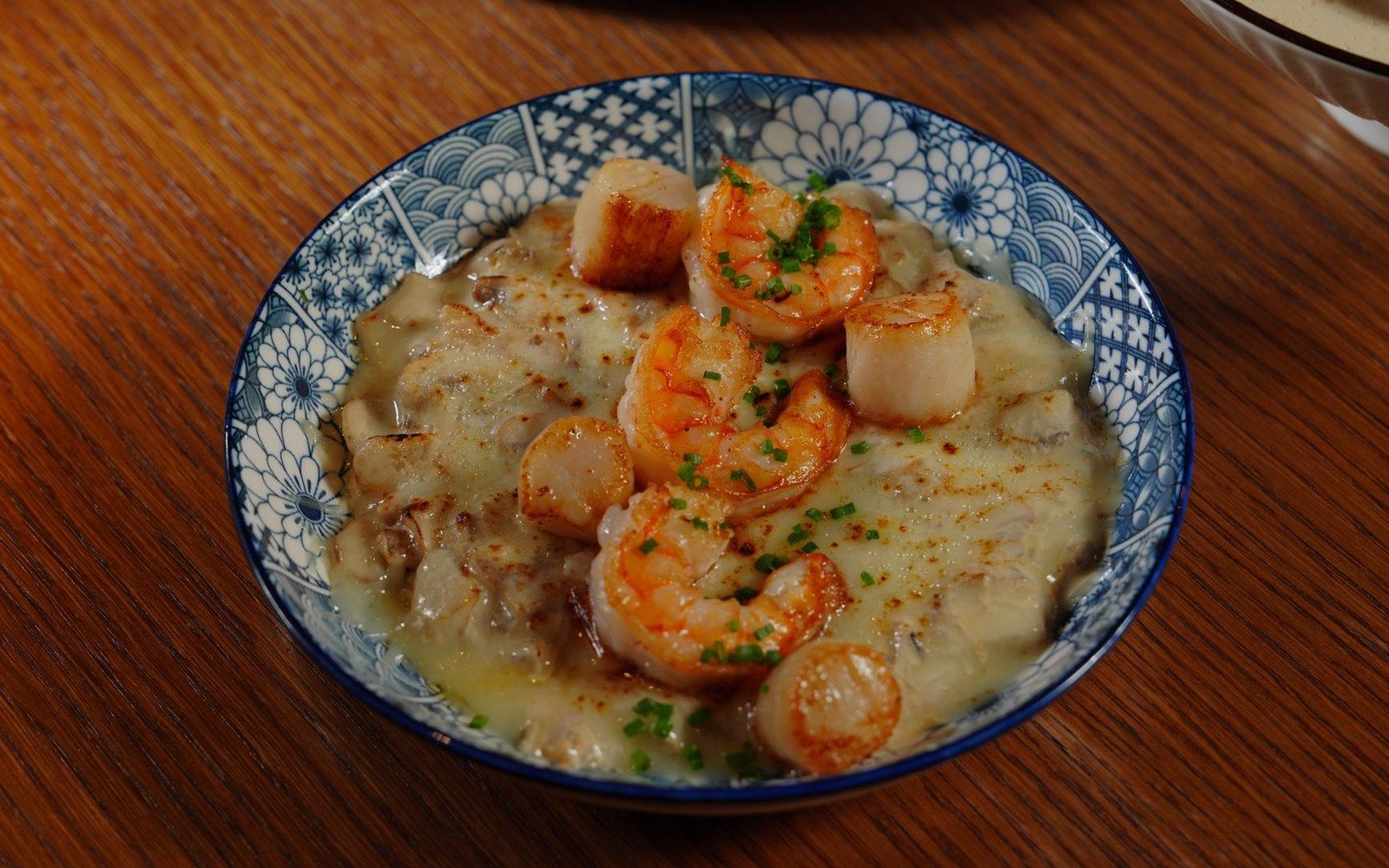
In 2021, Crook's Corner closed. The reasons were the ones that closed many independent restaurants in that period — a combination of pandemic disruption, operational difficulty, and the particular fragility of a small room running on thin margins. The closure was noted widely and mourned without sentimentality, which is the appropriate register for a place that had done its work. The building at 610 West Franklin Street still stands, a low structure set back slightly from the sidewalk, recognizable to anyone who has eaten there and unremarkable to anyone who has not.
What One Room Proved
The case that Crook's Corner changed something is not a local booster's claim. The Southern Foodways Alliance, based at the University of Mississippi, has documented the restaurant and Neal's influence as part of its oral history project on Southern food culture — an institution that exists in part because the argument Neal made in 1982 had been won clearly enough that it needed preserving. The revived interest in regional American cooking that characterized the restaurant culture of the 1990s and 2000s — the movement that elevated figures like Andrea Reusing in Chapel Hill and Ashley Christensen in Raleigh — has a documented ancestor in what Neal was doing on West Franklin Street.
One dish does not usually carry that weight. Shrimp and grits is an exception because the dish was also an argument, and the argument was right: that the South had ingredients and traditions that could support a serious restaurant culture without apology or exoticism. Chapel Hill in 1982 was not an obvious place to launch that argument — a small university town at the edge of tobacco country, not a food capital by any existing measure. That it happened here, at a small building with a ceramic pig on the roof, is exactly the kind of specificity that makes food history worth paying attention to.